
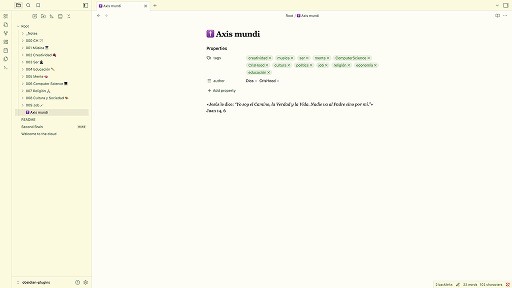
README file from
GithubNota Limonada Light
An Obsidian theme built on limonada-ds — CrisHood's design system — in two sibling modes:
- Light ("Verde de Basílica"): a warm paper base, forest-green primary, and a thin gold accent reserved for quiet, devotional detail. Light is the default.
- Dark (malachite): a tinted green floor instead of black, warm cream text instead of white, the same gold, and mint as the one interactive color.
The name keeps "Light" for history: Obsidian doesn't allow renaming a listed theme, so it stayed when the dark mode arrived in v3.
What v3 brings
- Dark mode — the system's dark palette mapped onto the same Obsidian variables as the light
one. Both modes share one map; only the semantic tokens switch, so every component, callout and
piece of chrome has a dark twin without duplicated rules.
- Five flat malachite steps (floor, panel, raised, line, selection), replacing Obsidian's stock gray ramp too, so modals, inputs and other unmapped surfaces stay in palette.
- Mint
#96CDB0carries links, tags, focus and the primary button; text on mint is the floor. - Liturgical status colors lifted for a dark panel; callouts follow them.
- Syntax highlighting calibrated to uniform contrast (amethyst keywords, emerald strings, lapis functions, garnet numbers…).
- The film grain blends with
screeninstead ofmultiply, and the grid backdrop draws on the dark line color.
- Name unchanged — 3.0.0 briefly shipped as Nota Limonada, which hid the theme from the directory (listed themes can't be renamed). 3.0.1 restores Nota Limonada Light and its Style Settings id, so existing installs update normally and keep their settings.
What v2.1 brings
- IBM Plex Mono replaces Fira Mono as the technical voice (code, the h6 "eyebrow", metadata labels, blockquote citations), so notes match the terminal setup the theme's author uses daily. Code renders at Medium (500).
What v2 brings
- Typography — Libre Franklin for headings,
Libre Baskerville for reading, and
IBM Plex Mono for technical detail. All three are
self-hosted, embedded directly in
theme.cssas base64 — Obsidian's Developer policies forbid a theme loading remote assets, so nothing is fetched over the network. - Color — the full "Verde de Basílica" palette mapped onto Obsidian's own CSS variables: paper/ink, the five structural colors, liturgical alert colors for callouts (success, warning, error, info).
- Layout details — square corners throughout, callouts and code blocks distinguished by fill rather than a frame, tables with a plain hairline border (Obsidian's table renderer doesn't support the gap-drawn grid the rest of the system uses elsewhere), and a blockquote treatment that swaps voice on purpose: Baskerville Italic with a thin gold rule, reading voice rather than brand voice.
- Style Settings support — reading font size, line width, an optional film-grain texture, and an optional hairline grid backdrop, all off/default until you turn them on.
Install
From Community themes inside Obsidian: search "Nota Limonada Light" → Install → Use. Switch between light and dark with Obsidian's own Base color scheme setting.
Local development
git clone [email protected]:crishood/nota-limonada-light.git "<vault>/.obsidian/themes/Nota Limonada Light"
cd "<vault>/.obsidian/themes/Nota Limonada Light"
node build.mjs   # regenerates theme.css from src/*.css + fonts/
Edit files under src/, never theme.css directly — it's a generated file (kept committed so
Obsidian can read it straight from a release, but the source of truth lives in src/).
Fonts & licensing
Libre Franklin, Libre Baskerville, and IBM Plex Mono are all licensed under the
SIL Open Font License, which explicitly permits bundling and
redistribution. See LICENSES-FONTS.md for full attribution.
The theme itself is MIT-licensed — see LICENSE.
Antiqua et Nova: Ad Maiorem Dei Gloriam et in Honorem Beatissimae Virginis Mariae.
"Sic luceat lux vestra coram hominibus, ut videant opera vestra bona et glorificent Patrem vestrum, qui in caelis est." — Matthaeus 5:16